-
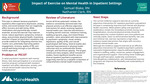
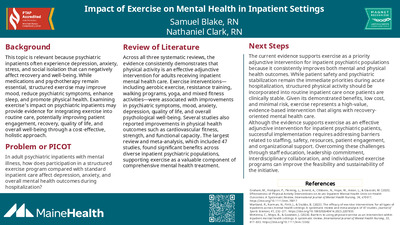
Impact of Exercise on Mental Health in Inpatient Settings
Samuel Blake RN and Nathaniel Clark RN
In adult psychiatric inpatients with mental illness, how does participation in a structured exercise program compared with standard inpatient care affect depression, anxiety, and overall mental health outcomes during hospitalization?
-
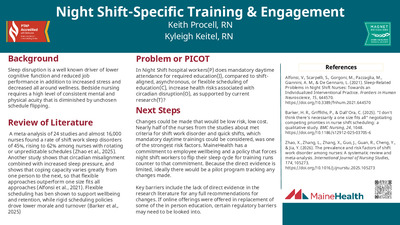
Night Shift-Specific Training & Engagement
Keith Procell RN and Kyleigh Keitel RN
In night shift hospital workers (P) does mandatory daytime attendance for required education (I), compared to shift-aligned, asynchronous, or flexible scheduling of education (C), increase health risks associated with circadian disruption (O), as supported by current research?
-
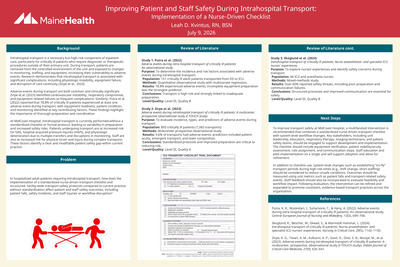
Improving Patient and Staff Safety During Intrahospital Transport: Implementation of a Nurse-Driven Checklist
Leah D. Kvintus RN, BSN
In hospitalized adult patients requiring intrahospital transport, how does the implementation of a standardized nurse-driven transport checklist and structured, facility-wide transport safety protocols compared to current practice without standardization affect patient and staff safety outcomes, including patient falls, safety incidents, and staff injuries or workflow disruption?
-
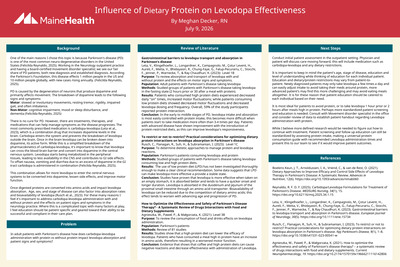
Influence of Dietary Protein on Levodopa Effectiveness
Meghan Decker RN
In adult patients with Parkinson's disease how does carbidopa-levodopa administration with protein vs without protein impact levodopa absorption and patient signs and symptoms?
-
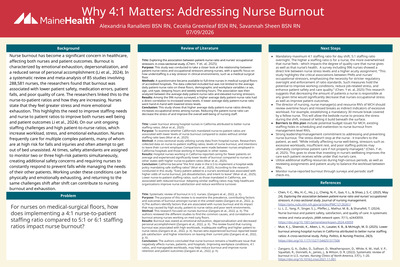
Why 4:1 Matters: Addressing Nurse Burnout
Alexandria Ranalletti BSN RN; Cecelia Greenleaf BSN, RN; and Savannah Sheen BSN, RN
For nurses on medical-surgical floors, how does implementing a 4:1 nurse-to-patient staffing ratio compared to 5:1 or 6:1 staffing ratios impact nurse burnout?
-
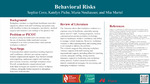
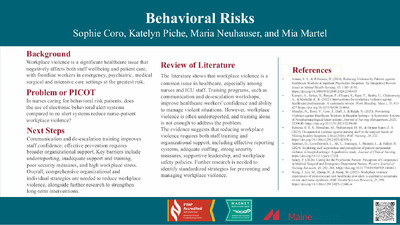
Behavioral Risks
Sophie Coro RN, Katelyn Piche RN, Maria Neihauser RN, and Mia Martel RN
In nurses caring for behavioral risk patients, does the use of electronic behavioral alert systems compared to no alert systems reduce nurse-patient workplace violence?
-
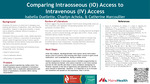
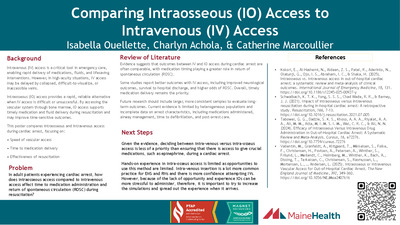
Comparing Intraosseous (IO) Access to Intravenous (IV) Access
Isabella Ouellette RN, Charlyn Achola RN, and Catherine Marcoullier RN
In adult patients experiencing cardiac arrest, how does intraosseous access compared to intravenous access affect time to medication administration and return of spontaneous circulation (ROSC) during resuscitation?
-
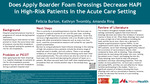
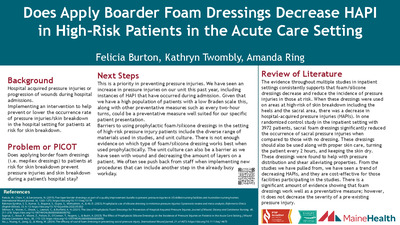
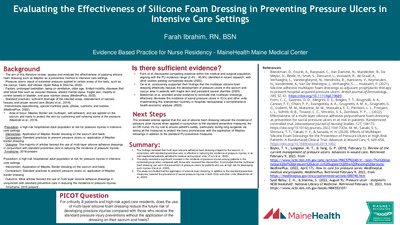
Does Apply Boarder Foam Dressings Decrease HAPI in High-Risk Patients in the Acute Care Setting
Felicia Burton RN, Kathryn Twombly RN, and Amanda Ring RN
Does applying border foam dressings (i.e.mepilex dressings) to patients at risk for skin breakdown prevent pressure injuries and skin breakdown during a patient's hospital stay?
-
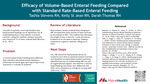
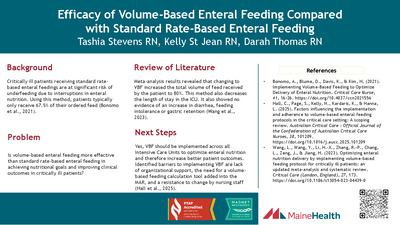
Efficacy of Volume-Based Enteral Feeding Compared with Standard Rate-Based Enteral Feeding
Tashia Stevens RN, Kelly St Jean RN, and Darah THomas RN
Is volume-based enteral feeding more effective than standard rate-based enteral feeding in achieving nutritional goals and improving clinical outcomes in critically ill patients?
-
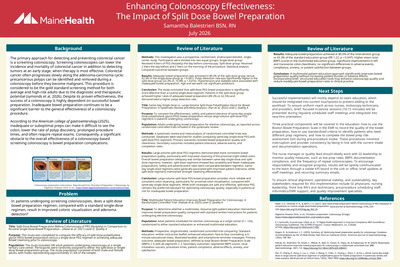
Enhancing Colonoscopy Effectiveness: The Impact of Split Dose Bowel Preparation
Samantha Balestrieri BSN, RN
In patients undergoing screening colonoscopies, does a split-dose bowel preparation regimen, compared with a standard single-dose regimen, result in improved colonic visualization and adenoma detection?
-
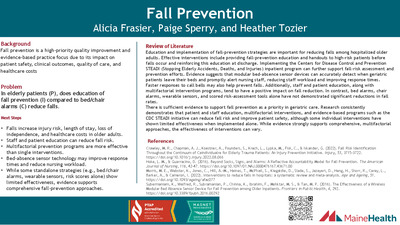
Fall Prevention
Alicia Frasier RN, Paige Sperry RN, and Heather Tozier RN
In elderly patients (P), does education of fall prevention (I) compared to bed/chair alarms (C) reduce falls.
-
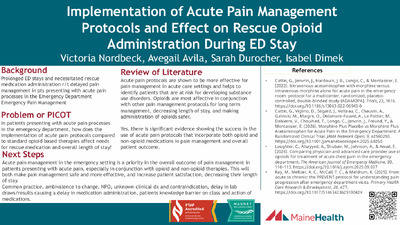
Implementation of Acute Pain Management Protocols and Effect on Rescue Opioid Administration During ED Stay
Victoria Nordbeck RN, Avegail Avila RN, Sarah Durocher RN, and Isabel Dimek RN
In patients presenting with acute pain processes in the emergency department, how does the implementation of acute pain protocols compared to standard opioid based therapies affect needs for rescue medication and overall length of stay?
-
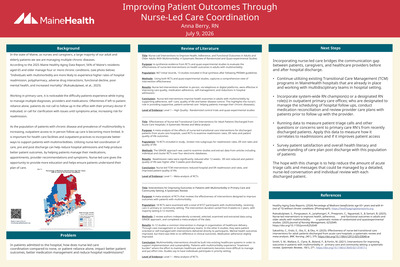
Improving Patient Outcomes Through Nurse-Led Care Coordination
Anna Berry RN
In patients admitted to the hospital, how does nurse-led care coordination compared to none, or patient reliance alone, impact better patient outcomes, better medication management and reduce hospital readmissions?
-
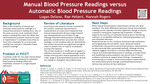
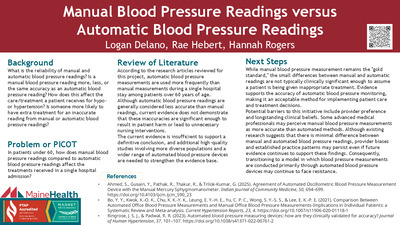
Manual Blood Pressure Readings versus Automatic Blood Pressure Readings
Logan Delano RN, Rae Hebert RN, and Hannah Rogers RN
In patients under 60, how does manual blood pressure readings compared to automatic blood pressure readings affect the treatments received in a single hospital admission?
-
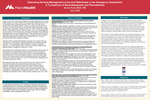
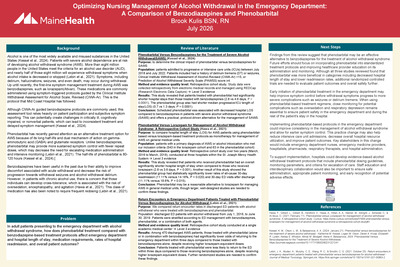
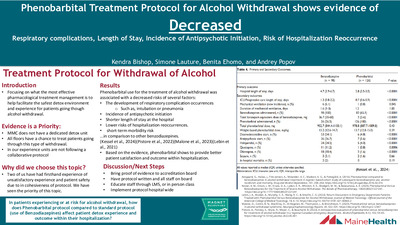
Optimizing Nursing Management of Alcohol Withdrawal in the Emergency Department: A Comparison of Benzodiazepines and Phenobarbital
Brook Kulis BSN, RN
In adult patients presenting to the emergency department with alcohol withdrawal syndrome, how does phenobarbital treatment compared with benzodiazepine-based treatment protocols affect emergency department and hospital length of stay, medication requirements, rates of hospital readmission, and overall patient outcomes?
-
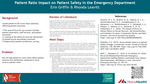
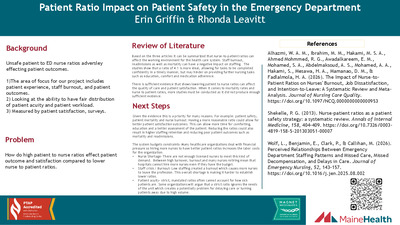
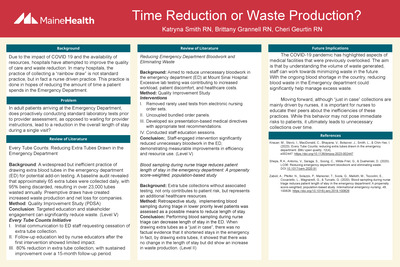
Patient Ratio Impact on Patient Safety in the Emergency Department
Erin Griffin RN and Rhonda Leavitt RN
How does high patient to nurse ratios effect patient outcome and satisfaction compared to lower nurse to patient ratios?
-
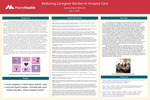
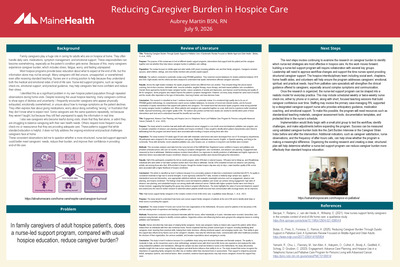
Reducing Caregiver Burden in Hospice Care
Aubrey Martin BSN, RN
In family caregivers of adult hospice patient’s, does a nurse-led support program, compared with usual hospice education, reduce caregiver burden?
-
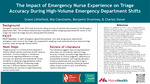
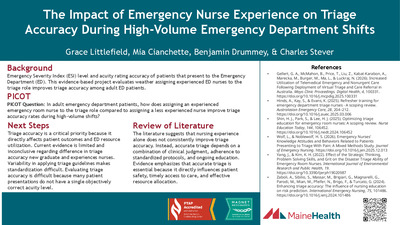
The Impact of Emergency Nurse Experience on Triage Accuracy During High-Volume Emergency Department Shifts
Grace Littlefield RN, Mia Cianchette RN, Benjamin Drummey RN, and Charles Stever RN
PICOT Question: In adult emergency department patients, how does assigning an experienced emergency room nurse to the triage role compared to assigning a less experienced nurse improve triage accuracy rates during high-volume shifts?
-
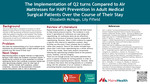
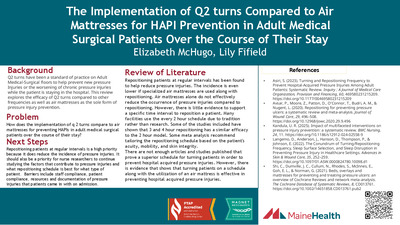
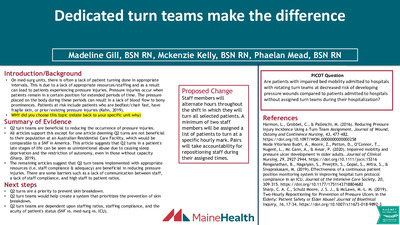
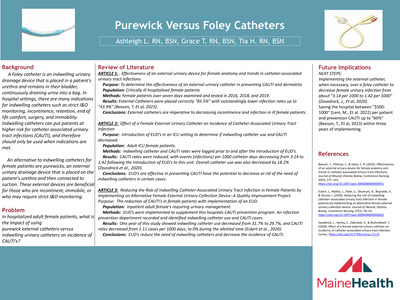
The Implementation of Q2 turns Compared to Air Mattresses for HAPI Prevention in Adult Medical Surgical Patients Over the Course of Their Stay
Elizabeth McHugo RN and Lily Fifield RN
How does the implementation of q 2 turns compare to air mattresses for preventing HAPIs in adult medical surgical patients over the course of their stay?
-
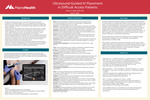
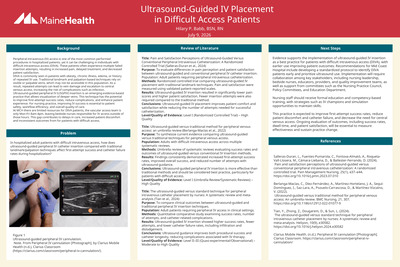
Ultrasound-Guided IV Placement in Difficult Access Patients
Hilary P. Babb BSN, RN
In hospitalized adult patients with difficult intravenous access, how does ultrasound-guided peripheral IV catheter insertion compared with traditional landmark/palpation techniques affect first-attempt success and catheter failure rates during hospitalization?
-

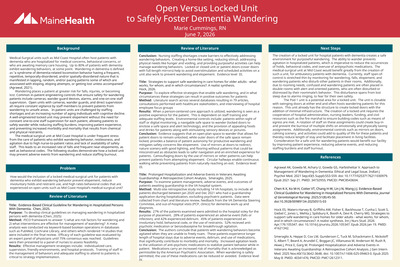
Open Versus Locked Unit to Safely Foster Dementia Wandering
Marie Cummings RN
How would the inclusion of a locked medical-surgical unit for patients with dementia who exhibit wandering behavior prevent elopement, reduce involuntary holds and restraint use, and high rates behavioral codes that are experienced on open units such as Mid Coast Hospital’s medical-surgical unit?
-
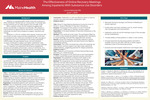
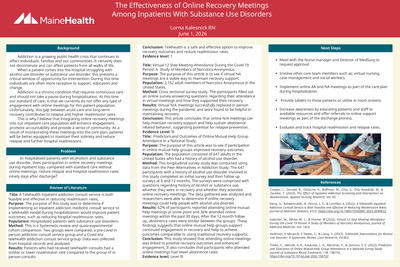
The Effectiveness of Online Recovery Meetings Among Inpatients With Substance Use Disorders
Lorna Kalesnick RN
In hospitalized patients with alcoholism and substance use disorder, does participation in online recovery meetings during inpatient stay, compared with standard care without online meetings, reduce relapse and hospital readmission rates ninety days after discharge?
-
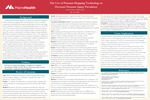
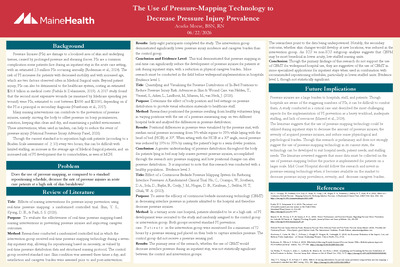
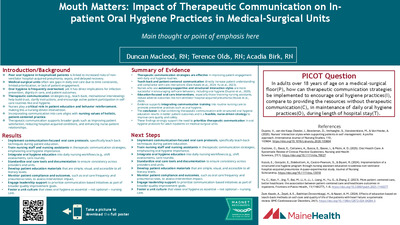
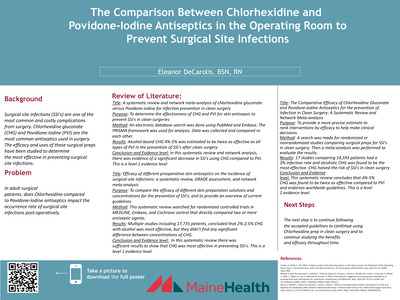
The Use of Pressure-Mapping Technology to Decrease Pressure Injury Prevalence
Acadia Morse BSN, RN
Does the use of pressure-mapping, as compared to a standard repositioning schedule, decrease the rate of pressure injuries in acute care patients at a high risk of skin breakdown?
-
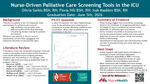
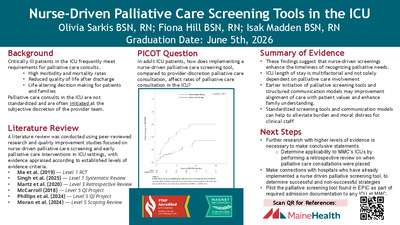
Nurse-Driven Palliative Care Screening Tools in the ICU
Olivia Sarkis BSN, RN; Fiona Hill BSN, RN; and Isak Madden BSN, RN
PICOT Question: In adult ICU patients, how does implementing a nurse-driven palliative care screening tool, compared to provider-discretion palliative care consultation, affect rates of palliative care consultation in the ICU?
-
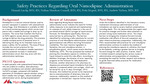
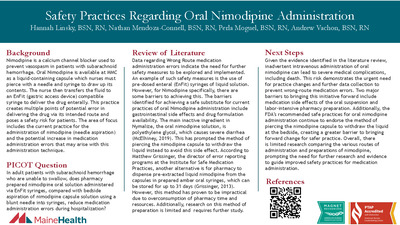
Safety Practices Regarding Oral Nimodipine Administration
Hannah Linsky BSN, RN; Nathan Mendoza-Connell BSN, RN; Perla Moguel BSN, RN; and Andrew Vachon BSN, RN
PICOT Question: In adult patients with subarachnoid hemorrhage who are unable to swallow, does pharmacy prepared nimodipine oral solution administered via EnFit syringes, compared with bedside aspiration of nimodipine capsule solution using a blunt needle into syringes, reduce medication administration errors during hospitalization?
-
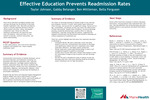
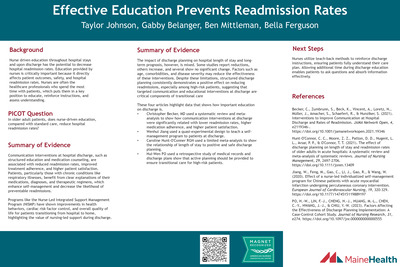
Effective Education Prevents Readmission Rates
Taylor Johnson, Gabby Belanger, Ben Mittleman, and Bella Ferguson
PICOT Question: In older adult patients, does nurse-driven education, compared with standard care, reduce hospital readmission rates?
-

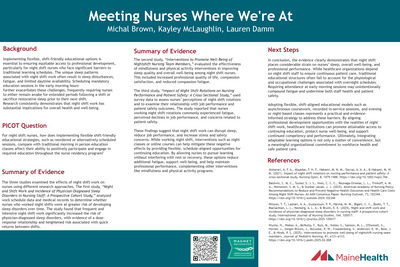
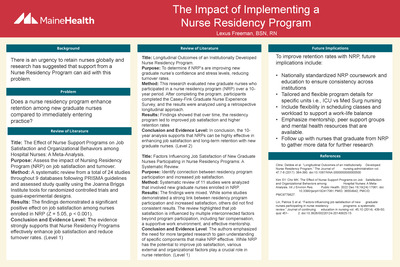
Meeting Nurses Where We're At
Michal Brown, Kayley McLaughlin, and Lauren Damm
PICOT Question: For night shift nurses, how does implementing flexible shift-friendly educational strategies, such as reordered or alternatively scheduled sessions, compare with traditional morning in person education classes affect their ability to positively participate and engage in required education throughout the nurse residency program?
-
Early Ambulation in Post-Operative Medical-Surgical Patients
Rebecca Telemaco RN
In adult post-operative patients on a medical surgical floor, does initiating early ambulation during the night shift, compared with delaying ambulation until daytime, lead to improved recovery outcomes such as reduced postoperative complications or shortened?
-
Enhancing Alzheimer's Care: Impact of Staff Education on Behavioral Outcomes
Laura Caton RN
Would additional staff training and education in Alzheimer’s patient interactions compared to minimal/or no staff training and education in Alzheimer’s patient interactions lead to reduced behavioral events in bedside nursing?
-
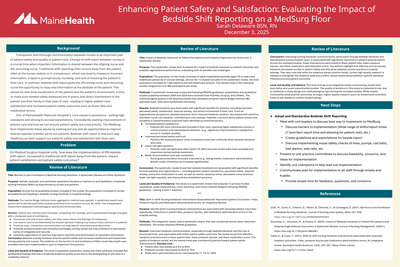
Enhancing Patient Safety and Satisfaction: Evaluating the Impact of Bedside Shift Reporting on a MedSurg Floor
Sarah Delaware BSN, RN
On Medical Surgical hospital units, how does the implementation of RN bedside shift report, compared to traditional shift report away from the patient, impact patient satisfaction and patient safety outcomes?
-
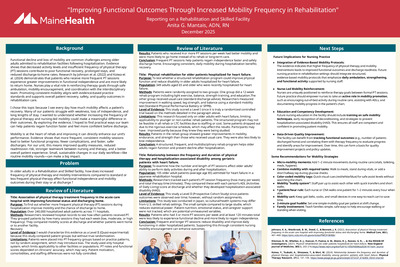
Improving Functional Outcomes Through Increased Mobility Frequency in Rehabilitation
Anita Mantais ADN, RN
In older adults in a Rehabilitation and Skilled facility, how does increased frequency of physical therapy and mobility interventions compared to standard or less frequent physical therapy affect functional independence and mobility outcomes during their stay or at discharge?
-
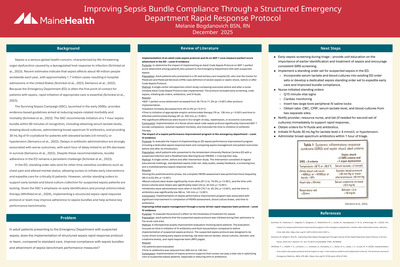
Improving Sepsis Bundle Compliance Through a Structured Emergency Department Rapid Response Protocol
Melanie Bogdanovich BSN, RN
In adult patients presenting to the Emergency Department with suspected sepsis, does the implementation of structured sepsis rapid response protocol or team, compared to standard care, improve compliance with sepsis bundles and attainment of sepsis benchmark performance measures?
-
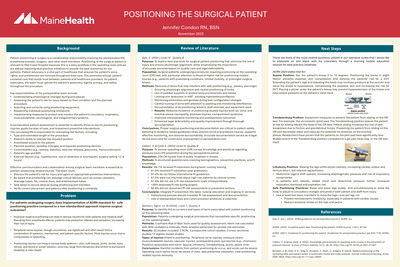
Positioning the Surgical Patient
Jennifer Condon RN, BSN
For patients undergoing surgery does implementation of AORN standard for safe positioning practice compared toa non-standardized approach improve surgical outcomes?
-
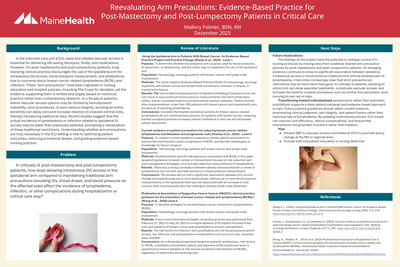
Reevaluating Arm Precautions: Evidence-Based Practice for Post-Mastectomy and Post-Lumpectomy Patients in Critical Care
Mallory Palmer BSN, RN
In critically ill post-mastectomy and post-lumpectomy patients, how does allowing intravenous (IV) access in the ipsilateral arm compared to maintaining traditional arm precautions (avoiding IVs, blood draws, and blood pressure on the affected side) affect the incidence of lymphedema, infection, or other complications during hospitalization or critical care stay?
-
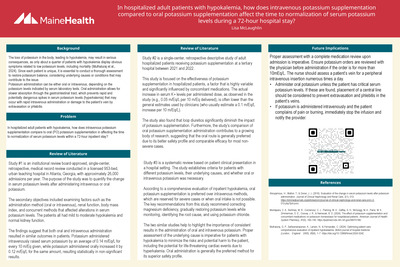
Hospitalized Adult Patients with Hypokalemia (cont.)
Lisa McLaughlin
In hospitalized adult patients with hypokalemia, how does intravenous potassium supplementation compare to oral (PO) potassium supplementation in affecting the time to normalization of serum potassium levels within a 72-hour inpatient stay?
-
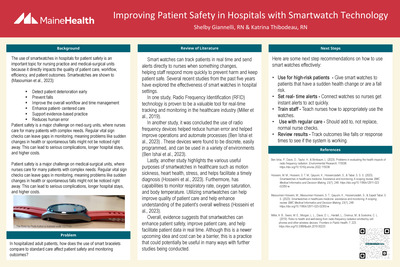
Improving Patient Safety in Hospitals with Smartwatch Technology
Shelby Giannelli RN and Katrina Thibodeau RN
In hospitalized adult patients, how does the use of smart bracelets compare to standard care affect patient safety and monitoring outcomes?
-
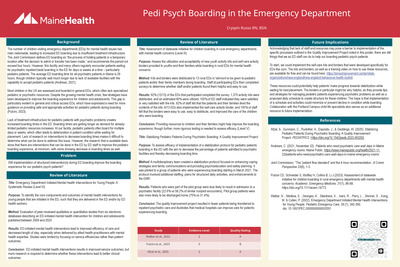
Pedi Psych Boarding in the Emergency Department
Cryspin Russo
Will implementation of structured intervention(s) during ED boarding improve the boarding experience for our pediatric psych patients?
-
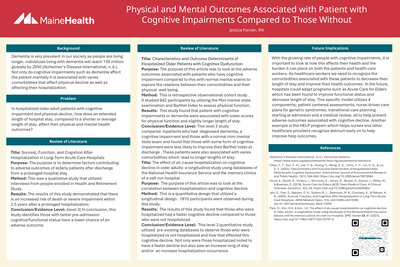
Physical and Mental Outcomes Associated with Patient with Cognitive Impairments Compared to Those Without
Jessica Forcier RN
In hospitalized older adult patients with cognitive impairment and physical decline, how does an extended length of hospital stay, compared to a shorter or average length of stay, affect their physical and mental health outcomes?
-
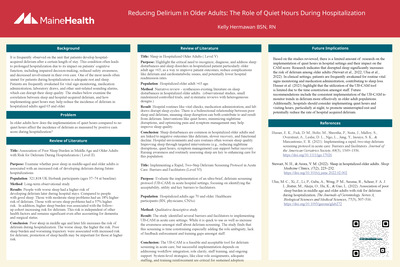
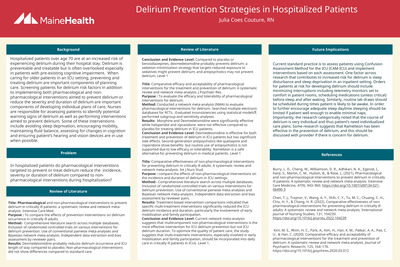
Reducing Delirium in Older Adults: The Role of Quiet Hours During Hospitalization
Kelly Hermawan BSN, RN
In older adults how does the implementation of quiet hours compared to no quiet hours affect the incidence of delirium as measured by positive cam score during hospitalization?
-
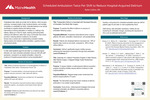
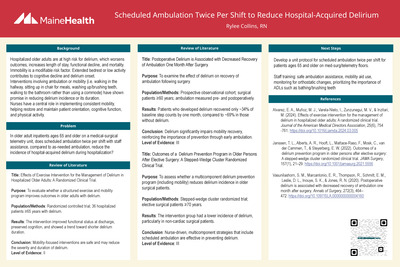
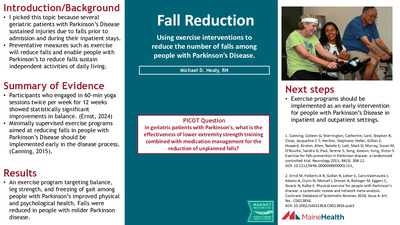
Scheduled Ambulation Twice Per Shift to Reduce Hospital-Acquired Delirium
Rylee Collins RN
In older adult inpatients ages 65 and older on a medical-surgical telemetry unit, does scheduled ambulation twice per shift with staff assistance, compared to as-needed ambulation, reduce the incidence of hospital-acquired delirium during hospitalization?
-
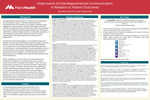
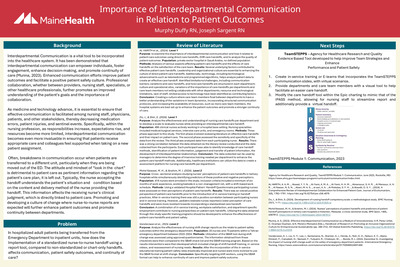
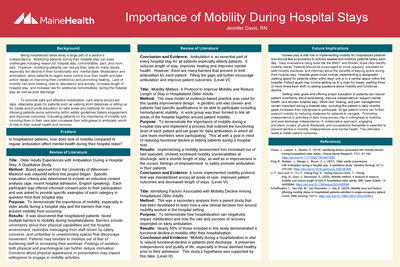
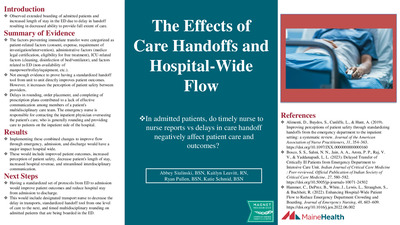
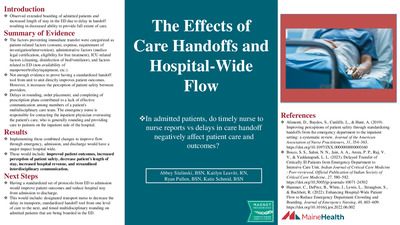
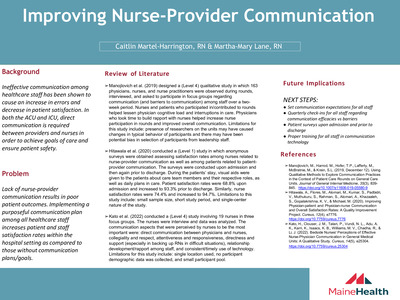
Importance of Interdepartmental Communication in Relation to Patient Outcomes
Murphy Duffy RN and Joseph Sargent RN
-
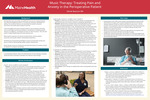
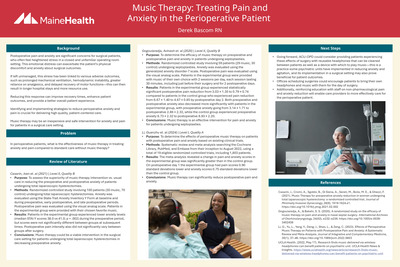
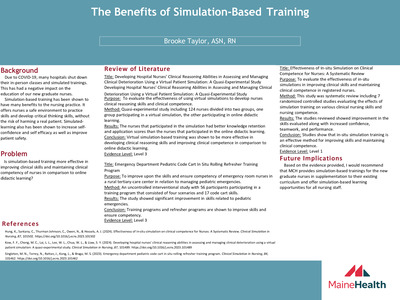
Music Therapy: Treating Pain and Anxiety in the Perioperative Patient
Derek Bascom RN
In perioperative patients, what is the effectiveness of music therapy in treating anxiety and pain compared to standard care without music therapy?
-
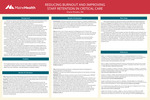
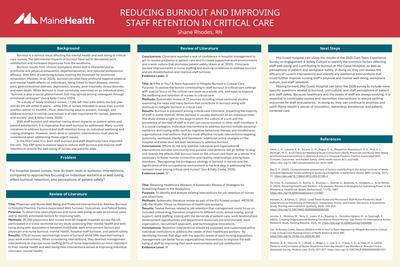
Reducing Burnout and Improving Staff Retention in Critical Care
Shane Rhodes
For hospital-based nurses, how do team-level or systemic interventions, compared to approaches focusing on individual resilience or well-being, affect burnout, retention, and perceptions of patient safety?
-
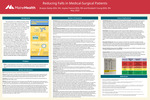
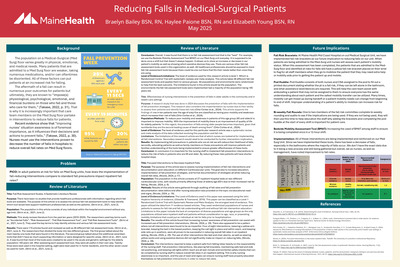
Reducing Falls in Medical-Surgical Patients
Braelyn Bailey BSN, RN; Haylee Paione BSN, RN; and Elizabeth Young BSN, RN
PICO: In adult patients at risk for falls on Med Surg units, how does the implementation of fall-reducing interventions compare to standard fall precautions impact inpatient fall rates?
-
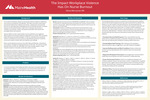
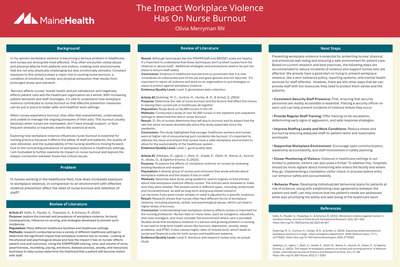
The Impact Workplace Violence Has on Nurse Burnout
Olivia Merryman RN
In nurses working in the healthcare field, how does increased exposure to workplace violence, in comparison to an environment with effective violence prevention affect the rates of nurse burnout and retention of staff?
-
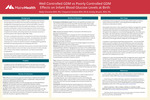
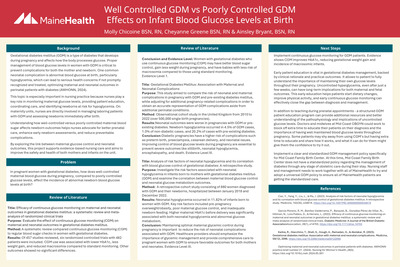
Well Controlled GDM vs Poorly Controlled GDM Effects on Infant Blood Glucose Levels at Birth
Molly Chicoine BSN, RN; Cheyanne Greene BSN, RN; and Ainsley Bryant BSN, RN
In pregnant women with gestational diabetes, how does well-controlled maternal blood glucose during pregnancy, compared to poorly controlled glucose levels, affect the incidence of abnormal newborn blood glucose levels at birth?
-
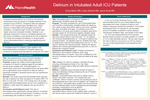
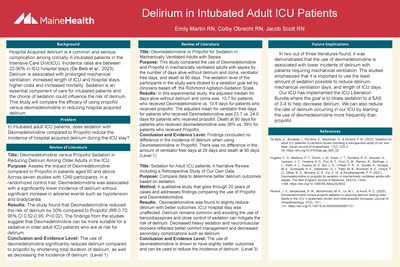
Delirium in Intubated Adult ICU Patients
Emily Martin, Colby Obrecht, and Jacob Scott
PICOT Question: In intubated adult ICU patients, does sedation with Dexmedetomidine compared to Propofol reduce the incidence of hospital acquired delirium during the ICU stay?
-
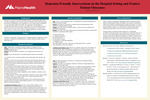
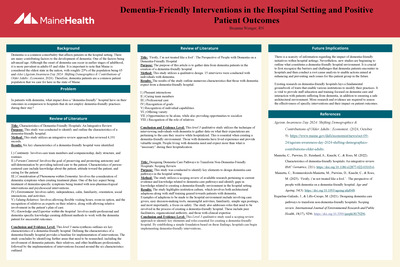
Dementia- Friendly Interventions in the Hospital Setting and Positive Patient Outcomes
Breanna Wenger
PICOT Question: In patients with dementia, what impact does a “dementia-friendly” hospital have on their outcomes in comparison to hospitals that do not employ dementia-friendly practices during their stay?
-
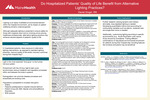
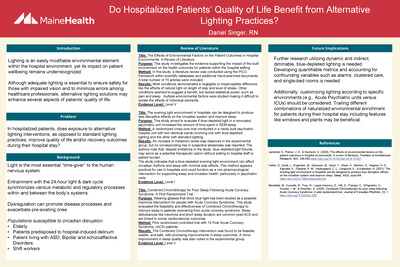
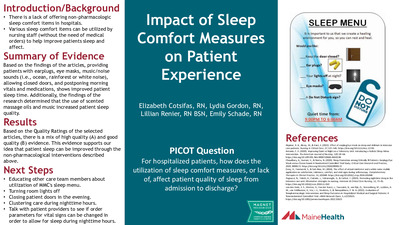
Do Hospitalized Patients' Quality of Life benefit from Alternative Lighting Practices?
Daniel Singer
PICOT Question: In hospitalized patients, does exposure to alternative lighting interventions, as opposed to standard lighting practices, improve quality of life and/or recovery outcomes during their hospital stay?
-
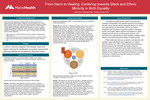
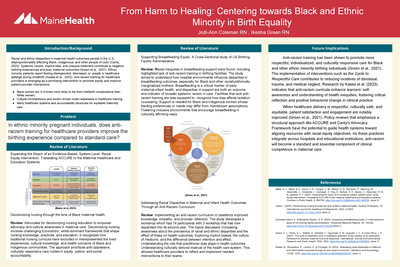
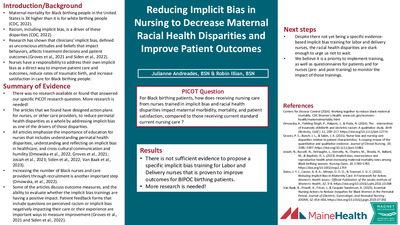
From Harm to Healing: Centering Towards Black and Ethnic Minority in Birth Equality
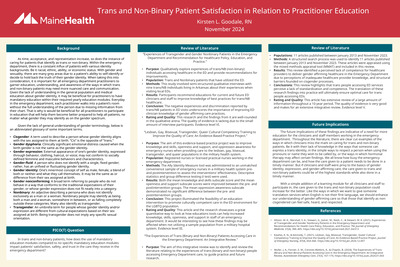
JodiAnn Coleman and Ikesha Green
PICOT Question: In ethnic minority pregnant individuals, does anti racism training for healthcare providers improve the birthing experience compared to standard care?
This is a collection of work created by members of the New Graduate Nurse Residency Program of MaineHealth. This program serves as an adjunct to the traditional clinical orientation experience of one-on-one with a registered nurse preceptor.
Printing is not supported at the primary Gallery Thumbnail page. Please first navigate to a specific Image before printing.