-
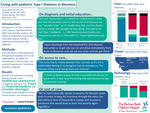
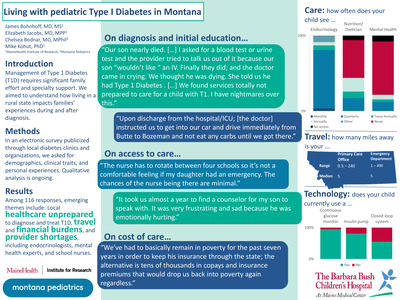
Access to Pediatric Type 1 Diabetes Care in Montana
James C. Bohnhoff, Michael Kohut PhD, Chelsea Bodnar, and Elizabeth A. Jacobs
Introduction: Management of Type 1 Diabetes (T1D) requires significant family effort and specialty support. We aimed to understand how living in a rural state impacts families’ experiences during and after diagnosis.
-
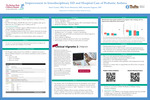
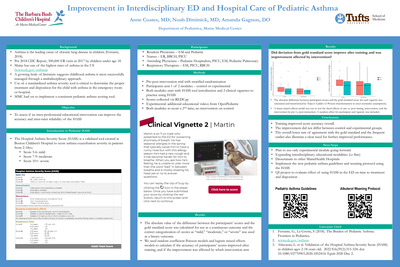
An Educational Intervention to Improve Pediatric Inter-rater Reliability of the Hospital Asthma Severity Score (HASS)
Anne Coates, Amanda Gagnon, and Noah Diminick
Objective: To assess if an inter-professional educational intervention can improve the accuracy and inter-rater reliability of the HASS
-
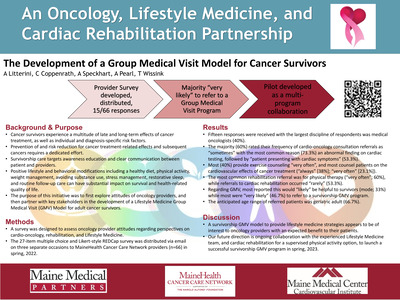
An Oncology, Lifestyle Medicine, and Cardiac Rehabilitation Partnership in the Development of a Group Medical Visit Model for Cancer Survivors
Amy Litterini, Caitlin Coppenrath, Ashley Speckhart, Amy Pearl, and Theodore Wissink
Methods/Approach: An oncology and cardiology team developed an oncology provider survey in REDCap designed to assess attitudes regarding perspectives on cardio-oncology, rehabilitation, and Lifestyle Medicine. The 27-item multiple choice and Likert-style survey was distributed via email on three separate occasions to MaineHealth Cancer Care Network providers (n=66) in spring, 2022.
-
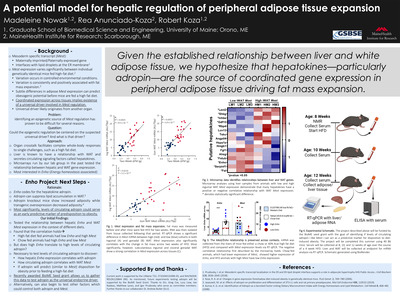
A potential model for hepatic regulation of peripheral adipose tissue expansion
Madeleine Nowak, Rea Anuciado, and Robert Koza
Given the established relationship between liver and white adipose tissue, we hypothesize that hepatokines—particularly adropin—are the source of coordinated gene expression in peripheral adipose tissue driving fat mass expansion.
-
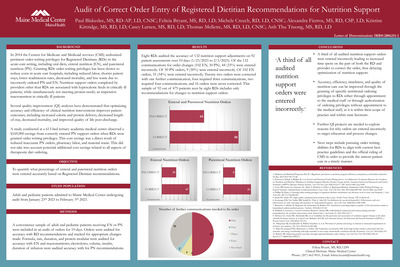
Audit of Correct Order Entry of Registered Dietitian Recommendations for Nutrition Support
Paul A. Blakeslee, Felicia Bryant, Michele Creech, Alexandra Fierros, Kristine Kittridge, Casey Larsen, Thomas Mellette, and Anh Thu Truong
Several quality improvement (QI) analyses have demonstrated that optimizing accuracy and efficiency of clinical nutrition interventions improves patient outcomes, including increased calorie and protein delivery, decreased length-of-stay, decreased mortality, and improved quality of life post-discharge.
-
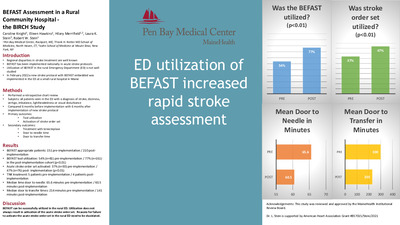
BEFAST Assessment in a Rural Community Hospital – the BIRCH Study
Caroline Knight, Eileen Hawkins, Hilary Merrifield, Laura Stein, and Robert Stein
Background: There are known regional disparities in treatment rates with thrombolysis and thrombectomy for acute ischemic stroke. BEFAST has been implemented in acute stroke protocols to aid in recognition of signs of stroke, but its utility in a rural ED is not well known.
-
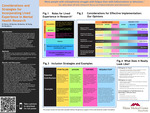
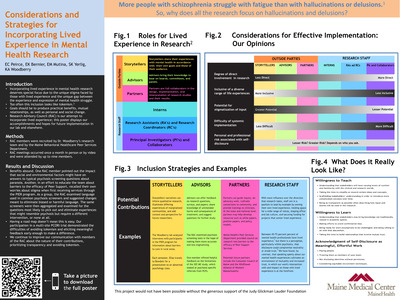
Considerations and strategies for incorporating lived experience in mental health research
Elizabeth Bernier, Elias Peirce, Elizabeth M. Mutina, Saras Yerlig, and Kristen A. Woodberry
Introduction: Incorporating lived experience in mental health research deserves special focus due to the unique stigma faced by those with lived experience and the unique gap between the experience and expression of mental health struggle.
-
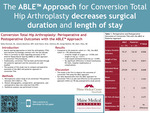
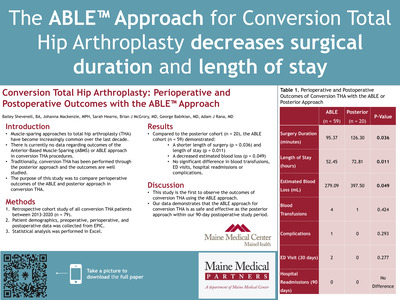
Conversion Total Hip Arthroplasty: Perioperative and Postoperative Outcomes with the ABLE Approach
Bailey Shevenell, Johanna Mackenzie, Sarah Hearns, George Babikian, Brian J. McGrory, and Adam Rana
The ABLE™ Approach for Conversion Total Hip Arthroplasty decreases surgical duration and length of stay
-
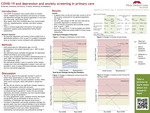
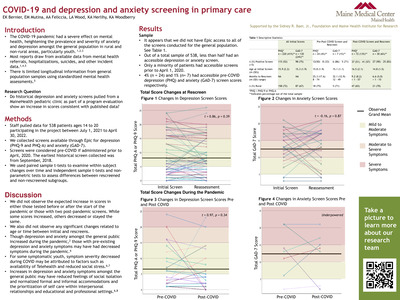
COVID-19 and depression and anxiety screening in primary care
Elizabeth Bernier, Abrey Feliccia, Leah Wood, Kate Herlihy, and Kristen A. Woodberry
Introduction:
• The COVID-19 pandemic had a severe effect on mental health, heightening the prevalence and severity of anxiety and depression amongst the general population in rural and non-rural areas, particularly youth.
• Most reports draw from available data from mental health referrals, hospitalizations, suicides, and other incident data
• There is limited longitudinal information from general population samples using standardized mental health assessments.
-
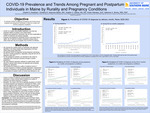
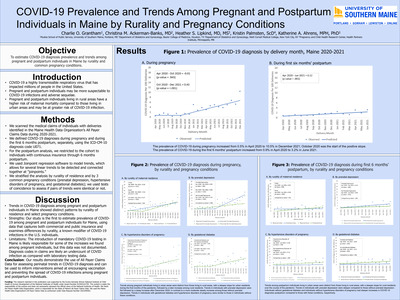
COVID-19 Prevalence and Trends Among Pregnant and Postpartum Individuals in Maine by Rurality and Pregnancy Conditions
Charlie Grantham, Christina Ackerman-Banks, Heather Lipkind, Kristin Palmsten, and Katherine Ahrens
Our study is the first to estimate prevalence of COVID-19 among pregnant and postpartum individuals for Maine, using data that captures both commercial and public insurance and examines differences by rurality, a known modifier of COVID-19 infections in the U.S. individuals.
-
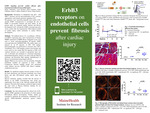
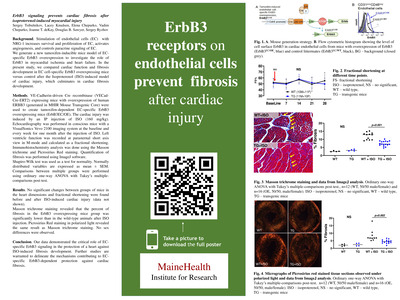
ErbB3 signaling prevents cardiac fibrosis after isoproterenol-induced myocardial injury
Sergey Tsibulnikov, Laccey Knudsen, Elena Chepurko, Vadim Chepurko, Joanne dekay, and Douglas Sawyer
We generate a new tamoxifen-inducible mice model of EC-specific ErbB3 overexpression to investigate the role of ErbB3 in myocardial ischemia and heart failure. In the present study, we compared cardiac function and fibrosis development in EC cell-specific ErbB3 overexpressing mice versus control after the Isoproterenol (ISO)-induced model of cardiac injury, which culminates in cardiac fibrosis development.
-
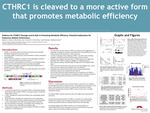
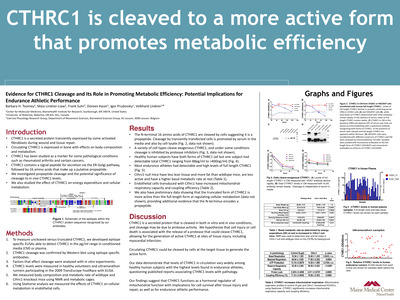
Evidence for CTHRC1 Cleavage and Role in Promoting Metabolic Efficiency: Potential Implications for Endurance Athletic Performance
Barbara Toomey, Volkhard Lindner, Doreen Kacer, and Igor Prudovsky
CTHRC1 is a secreted protein that is cleaved in both in vitro and in vivo conditions, and cleavage may be due to protease activity. We hypothesize that cell injury or cell death is associated with the release of a protease that could cleave CTHRC1, allowing for the generation of active CTHRC1 at sites of tissue injury, including myocardial infarction.
-
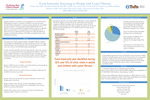
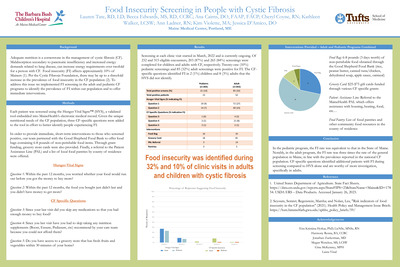
Food Insecurity Screening in People with Cystic Fibrosis
Rebecca Edwards, Lauren Tate, Ana Cairns, Cheryl Coyne, Kathleen Walker, Kim Violette, Ann Ladner, and Jessica D'Amico
Background: Adequate nutrition is a cornerstone in the management of cystic fibrosis (CF). Malabsorption secondary to pancreatic insufficiency and increased energy demands related to lung disease can increase energy requirements over twofold for a person with CF. Food insecurity (FI) affects approximately 10% of Mainers (1). Per the Cystic Fibrosis Foundation, there may be up to a threefold increase in the prevalence of FI in the CF population (2). To address this issue, we implemented FI screening in the adult and pediatric CF programs to identify the prevalence of FI within our population and to offer immediate interventions.
-
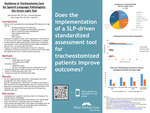
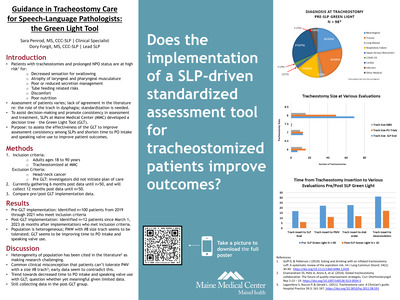
Guidance in Tracheostomy Care for Speech-Language Pathologists: The Green Light Tool
Sara Penrod and Dory Forgit
Purpose: to assess the effectiveness of the GLT to improve assessment consistency among SLPs and shorten time to PO intake and speaking valve use to improve patient outcomes.
-
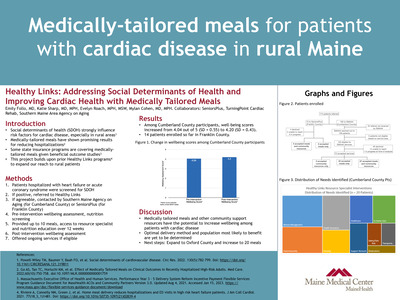
Healthy Links – Addressing Social Determinants of Health and Improving Cardiac Health with Medically Tailored Meals
Emily Follo, Katherine Sharp, and Mylan Cohen
Introduction:
• Social determinants of health (SDOH) strongly influence risk factors for cardiac disease, especially in rural areas
• Medically-tailored meals have shown promising results for reducing hospitalizations
• Some state insurance programs are covering medically-tailored meals given beneficial outcome studies
• This project builds upon prior Healthy Links programs to expand our reach to rural patients
-
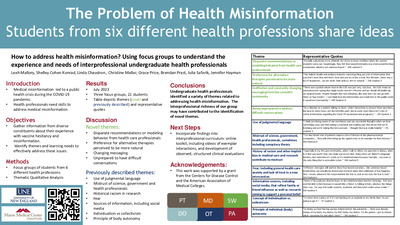
How to address health misinformation? Using focus groups to understand the experience and needs of Interprofessional undergraduate health professionals
Leah Mallory, Jennifer Hayman, Shelley Cohen Konrad, Linda H. Chaudron, Christine Mallar, Grace Price, Brendan Prast, and Julia Safarik
The Problem of Health Misinformation Students from six different health professions share ideas
-
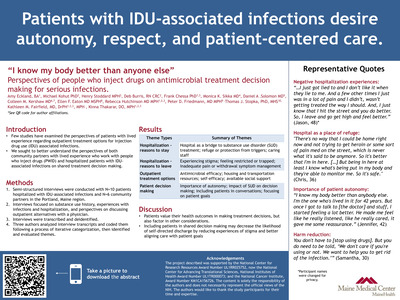
“I know my body better than anyone else” Perspectives of people who inject drugs on antimicrobial treatment decision making for serious infections
Amy Eckland, Michael Kohut PhD, Henry Stoddard, Debra Burris, Frank Chessa, Monica Sikka, Daniel Solomon, Colleen Kershaw, Ellen Eaton, Rebecca N. Hutchinson, Peter Friedmann, Thomas Stopka, Kathleen Fairfield, and Kinna Thakarar
Introduction:
• Few studies have examined the perspectives of patients with lived experience regarding outpatient treatment options for injection drug use (IDU) associated infections.
• We sought to better understand the perspectives of both community partners with lived experience who work with people who inject drugs (PWID) and hospitalized patients with IDU-associated infections on shared treatment decision making.
-
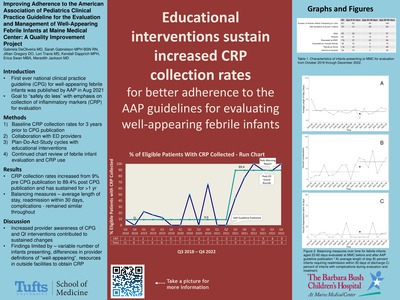
Improving Adherence to the American Association of Pediatrics Clinical Practice Guideline for the Evaluation and Management of Well-Appearing Febrile Infants at Maine Medical Center: A Quality Improvement Project
Gabriela De Oliveira MD; Sarah M. Gabrielson MPH, BSN, RN; Jillian Gregory DO; Lori Travis MS; Kendall Dapprich MPH; Meredith Jackson MD; and Erica Swan MBA
Educational interventions sustain increased CRP collection rates for better adherence to the AAP guidelines for evaluating well-appearing febrile infants.
-
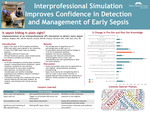
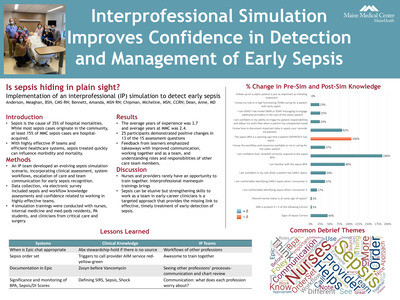
Is sepsis hiding in plain sight? Implementation of an interprofessional (IP) sepsis simulation to detect early sepsis
Sarah Chang, Amanda Bennett, Anne Dean, Meaghan Anderson, and Micheline Chipman
Early detection of hospital-acquired sepsis can be challenging. With highly effective IP teams and efficient healthcare systems, sepsis treated quickly can influence morbidity and mortality. This project is aimed at training IP teams in early recognition of sepsis using simulation. Nurses and providers rarely have opportunities to learn together. Simulation followed by an IP debrief is an excellent tool to collaborate for safe patient care.
-
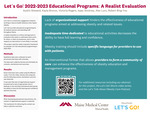
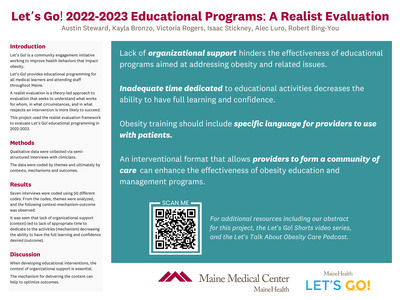
Let’s Go! 2022-2023 Educational Programs: A Realist Evaluation
Austin Steward, Kayla Bronzo, Victoria Rogers, Isaac Stickney, Robert Bing-You, and Alec Luro
Introduction:
Let’s Go! is a community engagement initiative working to improve health behaviors that impact obesity.
Let’s Go! provides educational programming for all medical learners and attending staff throughout Maine.
A realist evaluation is a theory-led approach to evaluation that seeks to understand what works for whom, in what circumstances, and in what respects an intervention is more likely to succeed.
This project used the realist evaluation framework to evaluate Let’s Go! educational programming in 2022-2023.
-
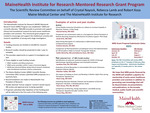
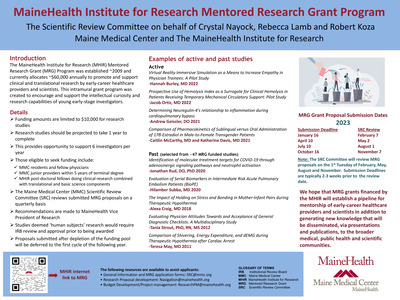
Maine Medical Center Mentored Research Grant Program
Crystal Nayock, Robert Koza, and Rebecca Lamb
Introduction:
The MaineHealth Institute for Research (MHIR) Mentored Research Grant (MRG) Program was established ~2009 and currently allocates ~$60,000 annually to promote and support clinical and translational research by early-career healthcare providers and scientists. This intramural grant program was created to encourage and support the intellectual curiosity and research capabilities of young early-stage investigators
-
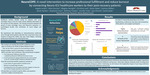
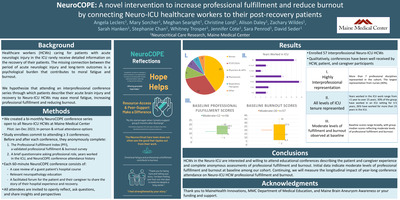
NeuroCOPE: A novel intervention to increase professional fulfillment and reduce burnout by connecting Neuro-ICU healthcare workers to their post-recovery patients
Angela Leclerc, Mary Sorcher, David Seder, Sara Penrod, Meghan Searight, Alison Daley, Sarah Hanken, Christine Lord, Whitney Trosper, Stephanie Chan, and Jennifer Cote
Background:
Healthcare workers (HCWs) caring for patients with acute neurologic injury in the ICU rarely receive detailed information on the recovery of their patients. The missing connection between the period of acute neurologic injury and long-term outcomes is a psychological burden that contributes to moral fatigue and burnout.
We hypothesize that attending an Interprofessional conference series through which patients describe their acute brain injury and recovery to Neuro-ICU HCWs may ease moral fatigue, increasing professional fulfillment and reducing burnout.
-
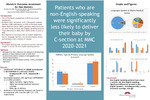
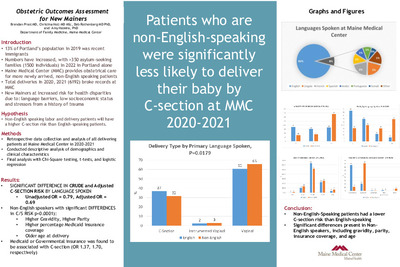
Obstetric Outcomes Assessment for New Mainers
Brendan Prast, Christina T. Holt, Amy Haskins, and Debra Rothenberg
Introduction
• 13% of Portland’s population in 2019 was recent immigrants
• Numbers have increased, with >350 asylum-seeking families (1500 individuals) in 2022 in Portland alone
• Maine Medical Center (MMC) provides obstetrical care for more newly arrived, non-English speaking patients
• Total deliveries in 2020, 2021 (6192) broke records at MMC
• New Mainers at Increased risk for health disparities due to: language barriers, low socioeconomic status and stressors from a history of trauma
-
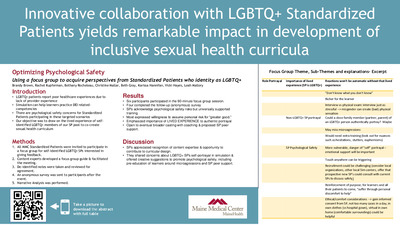
Optimizing psychological safety- perspectives of Standardized Patients who identify as LGBTQ+
Leah Mallory, Brandy Brown, Rachel Kupferman, Bethany Rocheleau, Christine Mallar, Beth Gray, Karissa Hannifan, and Vicki Hayes
Innovative collaboration with LGBTQ+ Standardized Patients yields remarkable impact in development of inclusive sexual health curricula
-
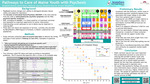
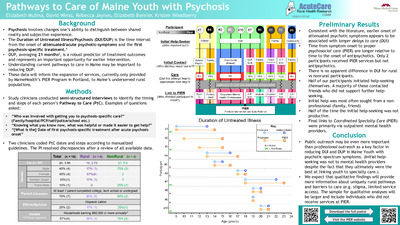
Pathways to Care of Maine Youth with Psychosis
Elizabeth M. Mutina, Rebecca Jaynes, Dave Weiss, Elizabeth Bernier, and Kristen A. Woodberry
Study clinicians conducted semi-structured interviews to identify the timing and steps of each person’s Pathway to Care (PtC).
-
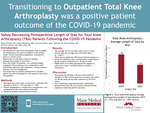
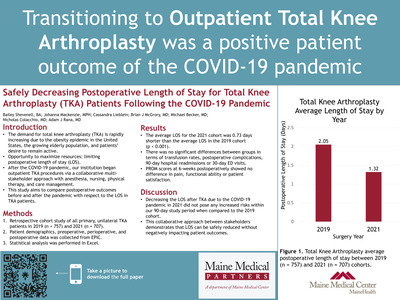
Shortening the Postoperative Length of Stay following Total Knee Arthroplasty does not Negatively Impact Short-term Patient Outcomes; a Retrospective Review of the Response to the COVID-19 Pandemic
Bailey Shevenell, Johanna Mackenzie, Cassandra Lieblein, Brian J. McGrory, Michael Becker, Nicholas Colacchio, and Adam Rana
Safely Decreasing Postoperative Length of Stay for Total Knee Arthroplasty (TKA) Patients Following the COVID-19 Pandemic
-
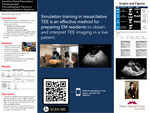
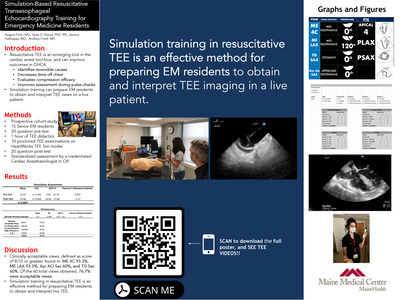
Simulation-Based Resuscitative Transesophageal Echocardiography Training for Emergency Medicine Residents
August Felix, Andrew Fried, Jessica Hathaway, and Tania D. Strout
Introduction: Resuscitative TEE is an emerging tool in the cardiac arrest tool-box, and can improve outcomes in OHCA.
• Identifies reversible causes
• Decreases time off chest
• Evaluates compression efficacy
• Improves assessment during pulse-checks
• Simulation training can prepare EM residents to obtain and interpret TEE views on a live patient.
-
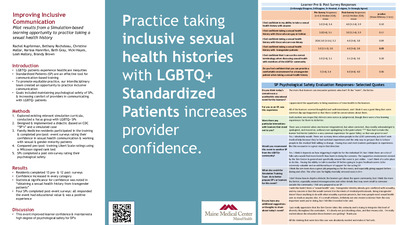
Simulation to Improve Health Equity- Pilot results from a Standardized Patient-based learning opportunity to practice taking an inclusive sexual health history
Leah Mallory, Rachel Kupferman, Bethany Rocheleau, Christine Mallar, Karissa Hannifan, Beth Gray, Vicki Hayes, and Brandy Brown
Improving Inclusive Communication Pilot results from a Simulation-based learning opportunity to practice taking a sexual health history.
-
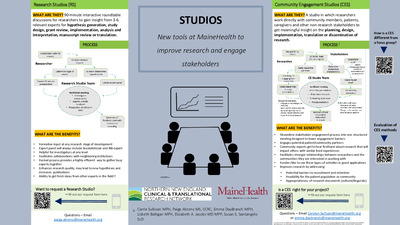
Studios: New Tools at MaineHealth to Improve Research and Engage Stakeholders
Carrie Sullivan, Paige Aherns, Emma DayBranch, Lisbeth Balligan, Elizabeth A. Jacobs, and Susan L. Santangelo
An introduction, description of benefits, and additional information about the new tools of the studios at MaineHealth.
-
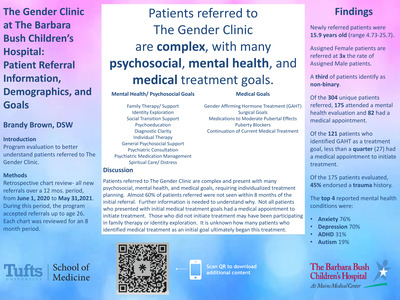
The Gender Clinic at The Barbara Bush Children’s Hospital: Demographics, Diagnoses, and Treatment Goals
Brandy Brown
Introduction: Program evaluation to better understand patients referred to The Gender Clinic.
-
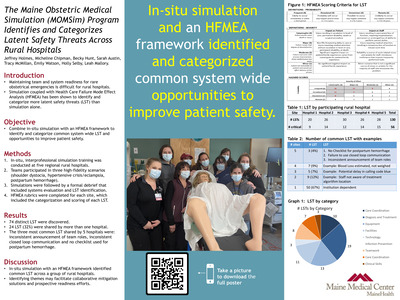
The Maine Obstetric Medical Simulation (MOMSim) Program Identifies and Categorizes Latent Safety Threats Across Rural Hospitals
Jeffrey Holmes, Leah Mallory, Micheline Chipman, Becky Hunt, Sarah Austin, Tracey E. McMillan, Emily Watson, and MaineHealth
Objective: Combine in-situ simulation with an HFMEA framework to identify and categorize common system wide LST and opportunities to improve patient safety
-
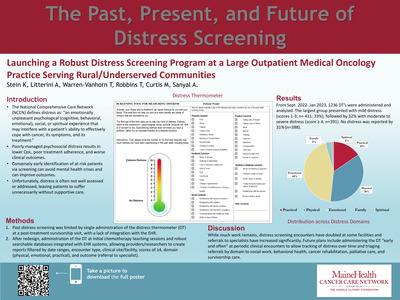
The Past, Present, and Future of Distress Screening: Launching a Robust Distress Screening Program at a Large Outpatient Medical Oncology Practice Serving Rural/Underserved Communities
Kevin Stein, Trisha Warren-Vanhorn, Meredith Curtis, Amy Litterini, and Amit Sanyal
After redesign, administration of the DT at initial chemotherapy teaching sessions and robust searchable databases integrated with EHR systems, allowing providers/researchers to create reports filtered by date ranges, encounter type, clinical site/facility, scores of ≥4, domain (physical, emotional, practical), and outcome (referral to specialist)
-
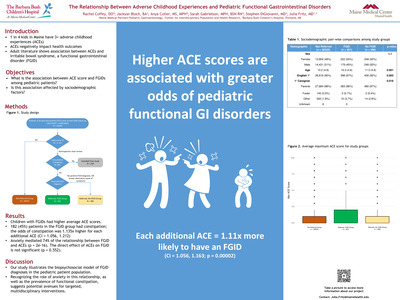
The Relationship Between Adverse Childhood Experiences and Pediatric Functional Gastrointestinal Disorders
Rachel Coffey, Jackson Bloch, Anya K. Cutler, Sarah M. Gabrielson, Stephen DiGiovanni, and Julia Fritz
Introduction:
• 1 in 4 kids in Maine have 3+ adverse childhood experiences (ACEs)
• ACEs negatively impact health outcomes
• Adult literature shows association between ACEs and irritable bowel syndrome, a functional gastrointestinal disorder (FGID)
-
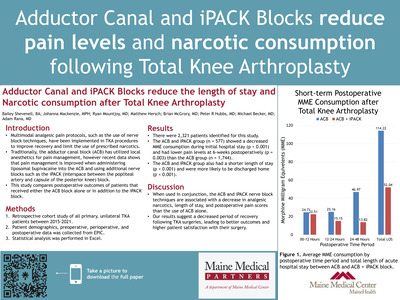
The Use of the iPACK Block with the Adductor Canal Block (ACB) Decreases 48-hour Narcotic Usage and Postoperative Pain following Total Knee Arthroplasty
Bailey Shevenell, Johanna Mackenzie, Matthew Hersch, Michael Becker, Brian J. McGrory, Nicholas Colacchio, Adam Rana, Ryan Mountjoy, and Rob Hubbs
Adductor Canal and iPACK Blocks reduce pain levels and narcotic consumption following Total Knee Arthroplasty
Printing is not supported at the primary Gallery Thumbnail page. Please first navigate to a specific Image before printing.