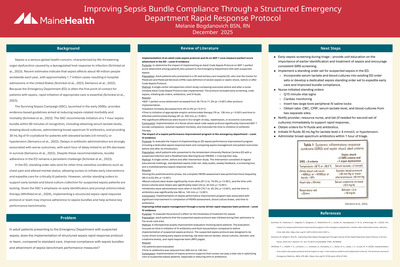
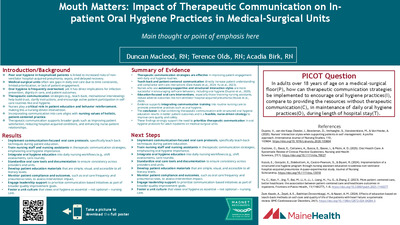
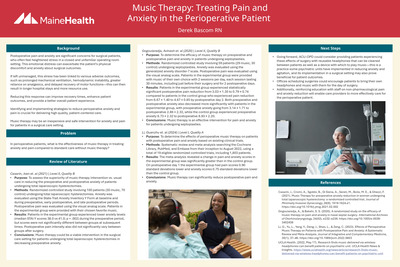
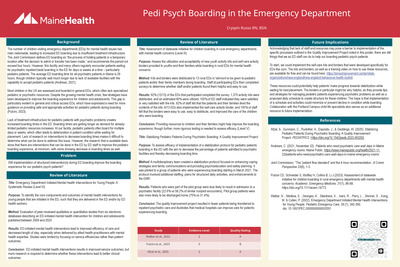
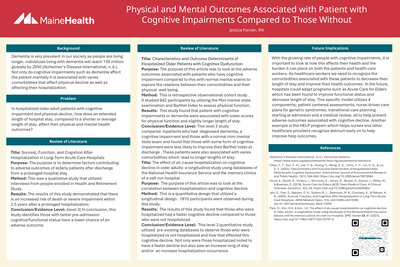
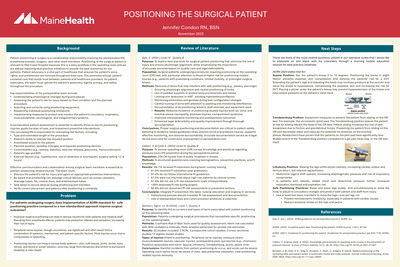
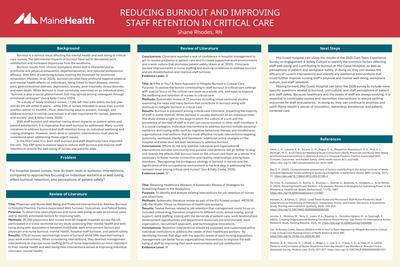
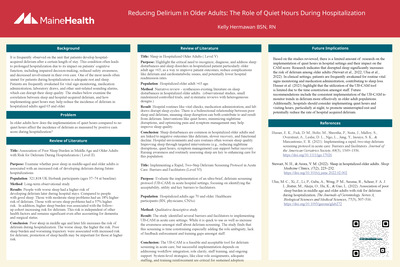
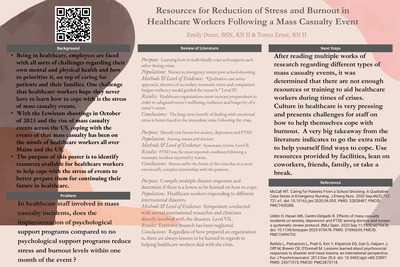
-
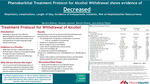
Treatment Protocol for Withdrawal of Alcohol
Kendra Bishop, Simone Lauture, Benita Ehomo, and Andrey Popov
PICOT Question: In patients experiencing or at risk for alcohol withdrawal, how does Phenobarbital protocol compared to standard protocol (use of Benzodiazepines) affect patient detox experience and outcome within their hospitalization?
-
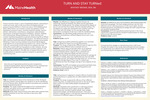
Turn and Stay Turned
Whitney Brown
Does the use of specialized positioning tools compared to standard hospital pillows improve the degree of turn achieved and maintained in patients requiring regular turns to offload pressure?
-
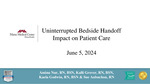
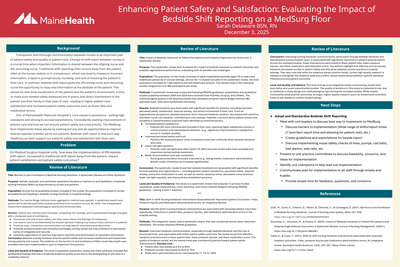
Uninterrupted Bedside Handoff Impact on Patient Care
Amina Nur RN, BSN; Kalli Grover RN, BSN; Kaela Godwin RN, BSN; and Sue Aubuchon RN
When addressing the needs of hospital inpatients(P), what is the effect of having an uninterrupted hand-off report(I) on patient care(C), compared to one that is delayed or interrupted by addressing emergent patient needs(O) during the shift change hand-off reporting(T)?
-
Unsafe Sleep Practices
Hillary Nash RN, BSN; Caitlin Rouselle RN, BSN; and Sabrina Schleh RN, BSN
In newborns does enhanced verbal and visual education given to their parents/guardians related to unsafe sleep practices help to lower the incidence of unsafe sleep reported on our unit?
-
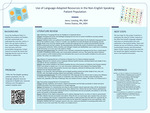
Use of Language-Adapted Resources in the Non-English Speaking Patient Population
Jenny Lansing and Emma Dubois
Background: Across the healthcare field, it is essential that patients and families can both communicate and understand the care they receive. A lack in this can lead to delays in care, missed findings, unnecessary care and costs, and even preventable emergencies. Limited research surrounds the impact that language barriers pose as well as methods to address this.
-
Use of SAT/SBT in Adult Critical Care
Jack Shibles RN, Kelsie Lynch RN, Grace Decker RN, and Matthew McDonald RN
In mechanically ventilated adult Intensive Care Unit (ICU) patients, how does having a protocol for pairing a spontaneous breathing trial (SBT) with a spontaneous awakening trial (SAT) compared to not having a protocol affect the number of ventilator days?
-
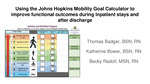
Using the Johns Hopkins Mobility Goal Calculator to Improve Functional Outcomes During Inpatient Stays and after Discharge
Thomas Badger BSN, RN; Katherine Bower BSN, RN; and Becky Radolf MSN, RN
Do adult hospital inpatients achieve pre-admission baseline functionality with higher frequency using the Johns Hopkins Mobility Goal Calculator (JH-MGC) versus the standard clinical approaches to mobility?
-
Virtual Reality in Pain Management
Morgen Allain and Jessica Dupler
Problem description:
Pharmacologically managed pain is a substantial component of inpatient, bedside nursing. Many of these drugs have side effects that are counterproductive to health and healing. Technological advancements have made virtual reality available on the consumer market, could they help manage pain without side effects?
-
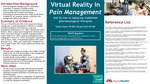
Virtual Reality in Pain Management and its Role in Replacing Traditional Pharmacological Therapies
Jessica Dupler RN BSN and Morgen Allain RN BSN
PICOT Question: In the adult inpatient population does engaging in virtual reality manage pain in a significant way?
-
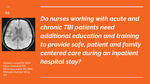
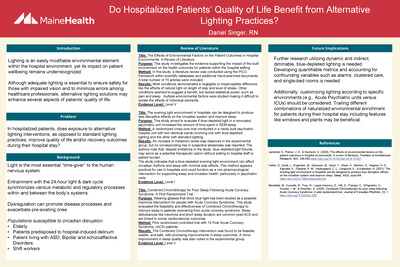
Why do we care about safety with TBI patients?
Delaney Loring RN BSN, Haley Greenleaf RN, Olivia Kaczmarek RN BSN, and Michaela Ryerson-Wing RN
Do nurses working with acute and chronic TBI patients need additional education and training to provide safe, patient and family centered care during an inpatient hospital stay?
-
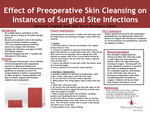
Effect of Preoperative Skin Cleansing on Instances of Surgical Site Infections
Katie Armington, Jessica Blank, Madison Waterhouse, Cynthia Gavett, Hailey Tofflemoyer, Rachelle Cassidy, Lindsay Bushnell, Jennifer Barriere, and Anastasia Colbath
Background
• On a single square centimeter of skin, there can be as many as 10 million aerobic bacteria
• Bacteria on a patient’s skin is the leading cause of infection related to surgery
• 17% of all hospital acquired infections come from surgical site infections
• Surgical site infections cost about $3,000 $29,000 per patient
-
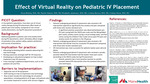
Effect of Virtual Reality on Pediatric IV Placement
Alicia Blakely BSN, RN; Rachel Matson BSN, RN; Elizabeth Johansson BSN, RN; Lindsey Barrow BSN, RN; and Lindsey Howe BSN, RN
In the pediatric population, how does use of virtual reality therapy during PIV placement affect levels of patient pain and anxiety, compared to non-virtual reality distractions, during PIV placement procedure?
-
How Healthcare Workers Can Improve the Experiences of Transgender Patients
Oliver Shears RN, BSN
Among adult transgender patients (18+) in an inpatient or outpatient setting, does having healthcare team members competent in transgender healthcare improve overall patient satisfaction with their hospital stay?
-
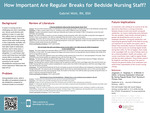
How Important Are Regular Breaks for Bedside Nursing Staff?
Gabriel Wohl
Background: A career in nursing can be a challenging one and a rewarding one. Nurses work directly with patients in need, in a way that their efforts have an immediate and tangible impact. Due to the nature of the work itself, nursing is also a physically, mentally, and emotionally demanding career that often leads to exhaustion, burnout, and in many cases, a departure from the profession altogether. It is well known that nurses work long hours and often receive little to no breaks. Is this lack of proper breaks a chief accessory to the overall dissatisfaction and burnout that nurses experience? What does the data tell us?
-
Impacts of Working Nightshift on New Graduate Nurses
Alivia Brown RN, ADN and Carlin Stimus RN, ADN
Does working nightshift have an impact New Graduate Nurses health and knowledge retention?
-
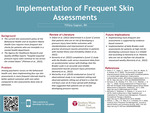
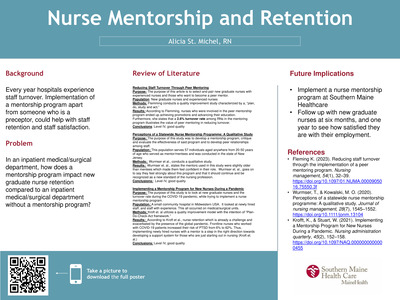
Implementation of Frequent Skin Assessments
Tiffany Gagnon
Background:
The current skin assessment policy at the Behavioral Health Unit at Southern Maine Health Care requires more frequent skin checks for patients who are immobile in a mental health department.
The Agency for Healthcare Research and Quality (AHRQ) reports “hospital-acquired pressure injury rates continue to rise across the United States” (Pittman et al., 2022).
-
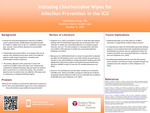
Initiating Chlorhexidine Wipes for Infection Prevention in the ICU
Samantha Carey
Background
• Central line-associated bloodstream infections (CLABSIs) result in approximately 28,000 deaths and approximately $2.3 billion in added costs to the U.S. healthcare system each year, and yet, many of these infections are preventable (Reynolds, 2021).
• Chlorhexidine gluconate (CHG) is an antiseptic that can be used for skin cleaning and has been shown to be effective against a wide range of organisms, including some antimicrobial-resistant organisms.
• The primary objective of this study was to assess the incidents of CLABSI’s when CHG wipes were implemented compared to traditional bathing soap and water for patients with a central line in a critical care setting. The secondary objective was to examine how cost effective CHG wipes were in comparison to traditional bathing supplies.
-
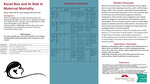
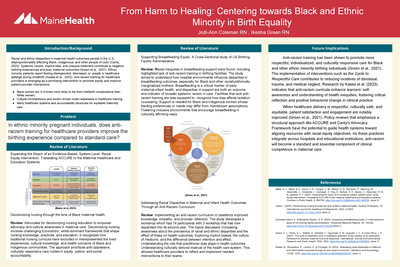
Racial Bias and its Role in Maternal Mortality
Allison Roets RN and Katy Flanagan RN
How does racial bias play a role in the mortality rates of minority, specifically black antepartum patients when compared to white women?
-
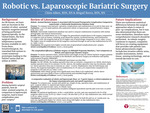
Robotic vs. Laparoscopic Bariatric Surgery
Chloe Aiken and Abigail Reera
Background: As OR nurses, we have seen an increase in the number of robot-assisted bariatric surgeries instead of being performed laparoscopically. In the United States, the first surgical robotic telepresence system became available in 1987. From there, IntuitiveSurgical, Inc. reworked that system to create numerous prototypes leading to the DaVinci series that we utilize at SMHC.
-
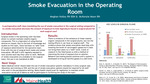
Smoke Evacuation in the Operating Room
Meghan Holley RN, BSN and McKenzie Moon RN
In perioperative staff, does mandating the use of smoke evacuation in the surgical setting compared to no smoke evacuation decrease the amount of exposure to toxic byproducts found in surgical plume for each surgical case?
-
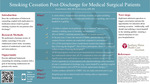
Smoking Cessation Post-Discharge for Medical Surgical Patients
Jessica Francis and Julie Lavery
Introduction: Does the combination of behavioral counseling coupled with medication (vs medication alone) result in greater smoking cessation for our patients after discharge?
-
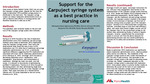
Support for the Carpuject Syringe System as a Best Practice in Nursing Care
Mostapha (Stav) Aghamoosa RN, BSN; Warren Johnson RN, ADN; Benjamin Kim RN, ADN; and Nicole Murphy RN, BSN
Many nurses at Maine Medical Center (MMC) are not using the Carpuject syringe system, despite the fact that the ready-to-administer (RTA) prefilled syringe product is distributed to the med room. The Carpuject syringe system can reduce medication administration errors as well as improve time efficacy in nursing practice and therefore should be in wide use at MMC.
-
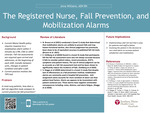
The Registered Nurse, Fall Prevention, and Mobilization Alarms
Anna Williams
Background:
Current Maine Health policy requires response to a mobilization alarm within 5 minutes by a RN, CNA or other clinician. Fall risk assessments are required upon arrival and admission, at the beginning of each shift, transfer between units, changes in patient condition and after a fall.
Current practice involves the TIPS tool.
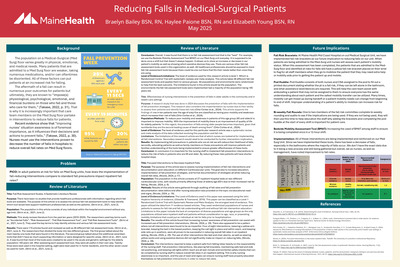
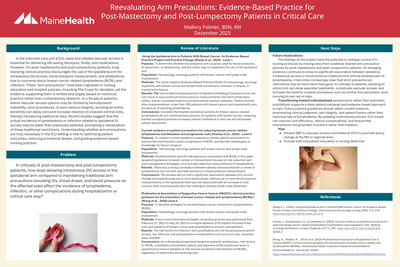
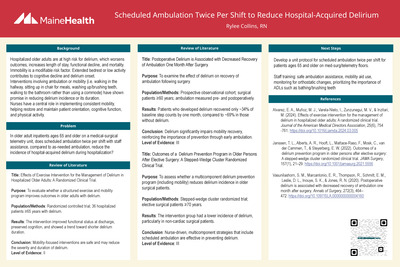
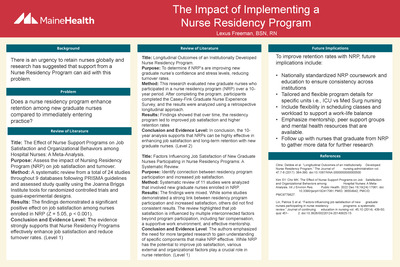
This is a collection of work created by members of the New Graduate Nurse Residency Program of MaineHealth. This program serves as an adjunct to the traditional clinical orientation experience of one-on-one with a registered nurse preceptor.
Printing is not supported at the primary Gallery Thumbnail page. Please first navigate to a specific Image before printing.